
Retinal degenerative diseases, including glaucoma and other optic neuropathies, lead to the irreversible loss of retinal ganglion cells (RGCs), the neurons that connect the eye to the brain, resulting in vision impairment and even blindness. The La Torre Lab is developing cell replacement strategies to restore these lost cells and restore visual function.
We study the generation, specification, and integration of stem cell-derived retinal neurons, with a focus on RGCs. Using in vivo models of degeneration, retinal organoids, and molecular tools, we investigate the factors that influence cell survival, axonal growth, and synaptic integration after transplantation. We are particularly interested in how the immune environment, especially microglia and other immune cells, affects graft survival, connectivity, and functional recovery.
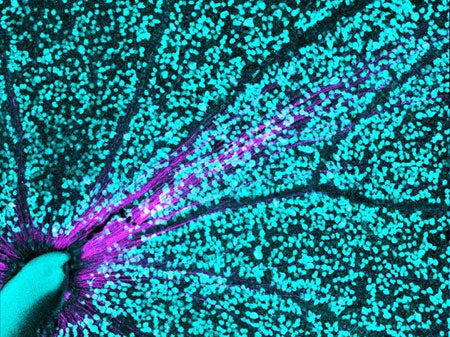
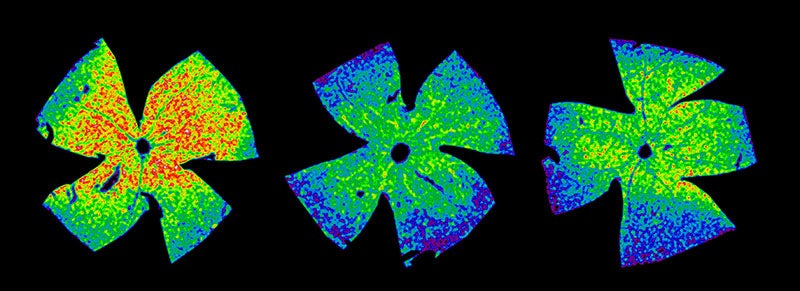
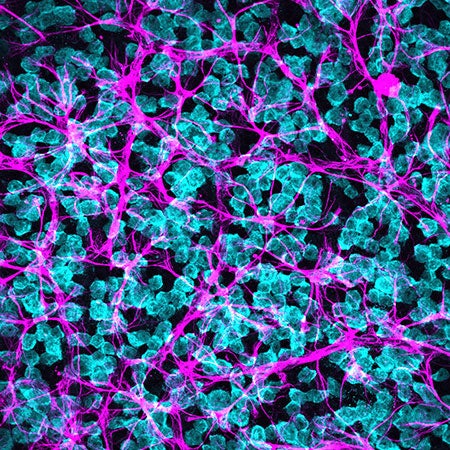
By integrating insights from retinal development, neurogenesis, and immune regulation, our lab seeks to define the cellular and molecular conditions that enable successful regeneration of retinal circuits, with the ultimate goal of restoring vision in degenerative diseases.
This project has only been possible thanks to the generosity of the Glaucoma Research Foundation. Please, check their webpage for more information.
Want to learn more? Check out our publications:
- Santamaría-Muñoz et al. 2025: Cell-Intrinsic Vulnerability and Immune Activation Cooperate to Drive Degeneration in a Mitochondrial Complex I Deficiency Model of Optic Neuropathy.
- Ward et al., Mol. Neurod., 2025. Modeling neurodegeneration in the retina and strategies for developing pan-neurodegenerative therapies.
- Pereiro et al. Cells, 2020. Effects of Adult Müller Cells and Their Conditioned Media on the Survival of Stem Cell-Derived Retinal Ganglion Cells.
- Miltner et al. Int. J. Mol. Sci, 2019. A Novel Reporter Mouse Uncovers Endogenous Brn3b Expression.
- Miltner et al. Dev. Dyn., 2019. Retinal Ganglion Cell Replacement: Current Status and Challenges Ahead.