
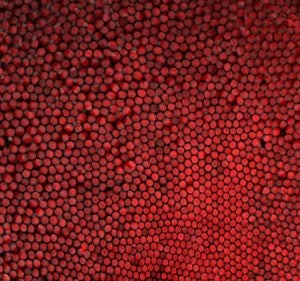
The primate retina has unique features not found in most other vertebrates, most notably the fovea, a small pit in the central retina where cone photoreceptors are densely packed, providing the highest visual acuity and enabling tasks such as reading this website and recognizing faces. Understanding how this specialized structure forms is critical for uncovering the cellular and molecular programs that shape retinal architecture.
Our lab investigates the mechanisms that drive primate retinal development, focusing on the spatial and temporal regulation of progenitor proliferation and differentiation. We are particularly interested in the molecular choreography that establishes the fovea, including how progenitor cells are patterned across the temporal-nasal axis, how cell fate decisions are coordinated, and how signaling gradients guide tissue morphogenesis.
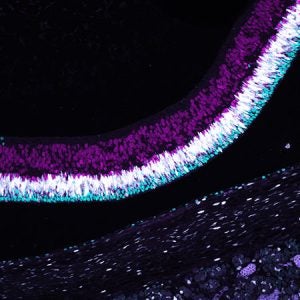
By combining comparative studies and stem cell-derived retinal organoids, we aim to identify the genetic and signaling programs that generate the foveal region. This work provides a foundation for understanding species-specific retinal development and informs strategies for modeling human retinal diseases and designing targeted cell replacement therapies.
To dive deeper into this project, check out our publications:
- Krueger et al: Diff., 2024. Expression patterns of CYP26A1, FGF8, CDKN1A, and NPVF in the developing rhesus monkey retina.
- Fishman et al. Front. Cell Dev. Biol, 2021. MicroRNA Signatures of the Developing Primate Fovea.
- Hoshino et al. Dev. Cell, 2017. Molecular Anatomy of the Developing Human Retina.